

Tuscany has always been an area of great wines, just think that already in the 6th century BC, at the time of the Etruscans, a large part of the region was already cultivated with vineyards.
We find hints of the production of Chianti wine in 1000-year-old parchments, and important families such as the Ricasoli and the Antinori inaugurated their wine production already in the Middle Ages.
Chianti Colli Aretini
The town of Duddova is set in a production area of Chianti called Chianti Colli Aretini, a few kilometers away from the Chianti Classico area. Vineyards located at an altitude no higher than 700 meters and consisting mainly of pebbly soil are suitable for production. The specification requires at least 70% Sangiovese grapes.
The color is ruby red, the flavor is generally fresh, dry, sparkling and lively. It is a wine for all meals, medium alcoholic and lively, to be drunk young.
Chianti Classico
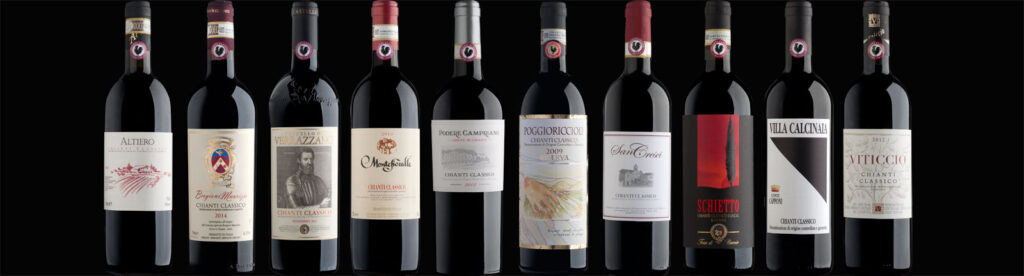
Chianti Classico is one of the noblest wines in the world and boasts the name of the land from which it originates, Chianti, which extends across the territory of eight municipalities between the provinces of Florence and Siena. It has a brilliant ruby colour, tending towards garnet and a deeply vinous aroma. The specification requires aging for at least 11 months and a minimum alcohol content of 12%.
The best grapes are destined for the Riserva from the beginning and are aged in small oak barrels which release their aromas to the wine. In this case the minimum aging becomes 24 months and the minimum alcohol content is 12.5%.
The undisputed protagonist of Chianti Classico is the superior quality Sangiovese vine, present in percentages that can range from 80 to 100%. Among the most famous wineries are Antinori, Frescobaldi, Ricasoli, Brolio, Dievole, Mazzei, Castello di Bossi, San Felice, Felsina, Rocca delle Macie, Ruffino.
Chianti Rufina
Chianti Rufina is a historic wine production area, among the most important in Tuscany, located north-east of the city of Florence, on the slopes of the Tuscan-Romagnolo Apennines. That of Rufina is the smallest of the seven specifications of Chianti, and this shows how the fame of Rufina wine is not linked to large quantities of production, but to the very high peculiarity of the geological conformation of the land and the microclimate.

Brunello di Montalcino
The Brunello di Montalcino is a red wine produced exclusively in the area of the hill of Montalcino, in the province of Siena. Brunello di Montalcino can be considered, together with Barolo, the Italian red wine with the greatest longevity. It is a wine with an intense, persistent, broad aroma, with hints of undergrowth, aromatic wood, small fruits, vanilla and jam. It is produced from 100% Sangiovese grapes and must be subjected to an aging period of at least two years in oak barrels, and at least four months of refinement in the bottle.

Vino Nobile di Montepulciano
The name Vino Nobile is found for the first time in a document dated September 1787. Produced with at least 70% Sangiovese grapes, it has a ruby color tending towards garnet, an intense and floral aroma, hints of wood on the palate. The production area includes the hilly terrain between 250 and 600 meters above sea level in the municipality of Montepulciano in the Province of Siena.
Bolgheri
Bolgheri is a DOC wine whose production falls entirely in the municipal area of Castagneto Carducci, in the province of Livorno. With the 1994 specification, the identity of the great Bolgheri red wines made with Cabernet (Sauvignon and Franc) and Merlot grapes was officially recognised, often accompanied by Syrah, Petit Verdot and in rare cases by Sangiovese.
The roundness and softness and sweetness of the fruit with a long finish are striking on the palate. There is often also a savory note that cannot help but bring the mind to the presence of the sea. Among the large bottles we find Sassicaia, Ornellaia, Guado al Tasso, Bruciato.
Super Tuscan
Super Tuscans are defined as red wines produced in Tuscany which purposely do not respect the traditional rules of preparation of the region, but use other types of grapes, especially Cabernet Sauvignon, in addition to or instead of the traditional Sangiovese and therefore cannot be classified as DOCG products.
Among these, how can we not mention the Tignanello by Antinori, produced from the blend of Sangiovese and Cabernet, the Pergole Torte by Montevertine, Fontalloro by Fèlsina and Oreno by Tenuta Setteponti.
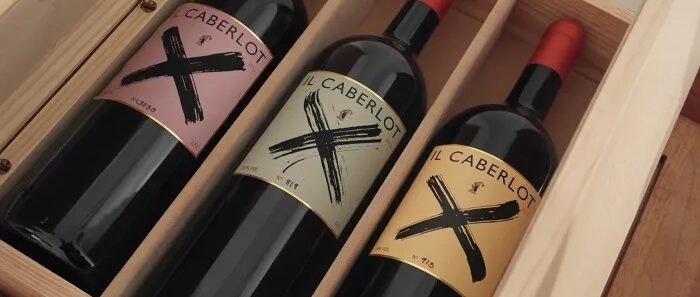
A Super Tuscan for connoisseurs is Caberlot, produced by Podere il Carnasciale, a few kilometers away from Duddova.