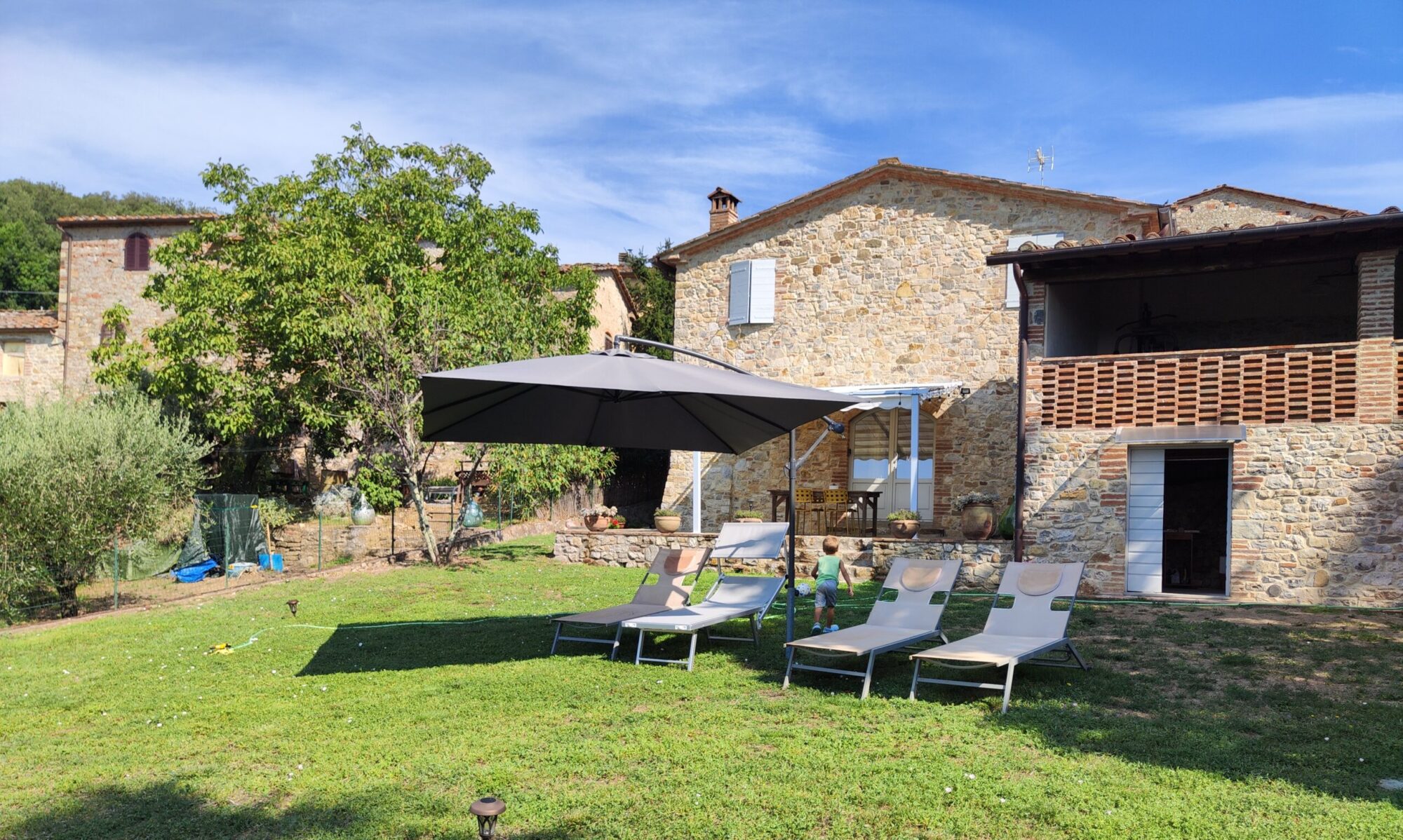

Valdambra, a strategic territory sandwiched between Siena, Arezzo and Florence, has always been disputed and therefore fortified: as many as seventeen castles, in such a small space, are historical evidence of this even if only a few shreds of them remain today.
Duddova
Montebenichi
Sogna
Cennina
Solata
Badia a Ruoti
Lupinari
Galatrona
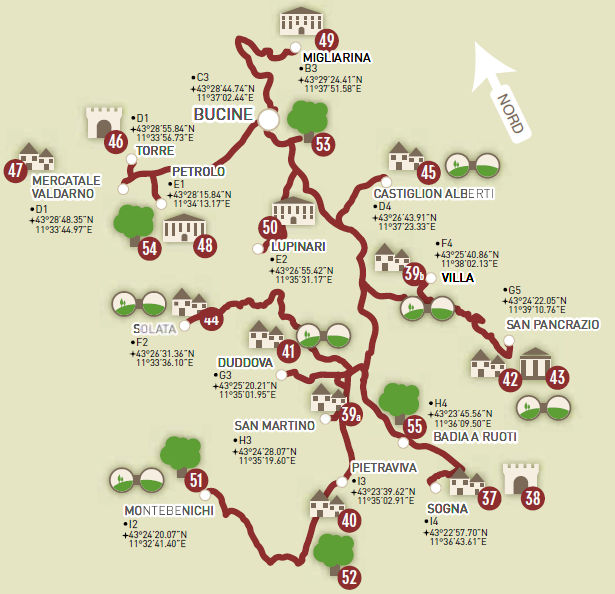
Duddova
The village of Duddova probably arose between the 5th and 6th centuries AD, when the barbarian invasions (first Ostrogoths, then Lombards) devastated and changed the appearance of Valdambra forever. It seems that the toponym Duddova derives from the name of an ancient Ostrogothic leader, Dudda.
In the 13th century, Duddova was among the possessions of the powerful Ghibelline Ubertini family. It is precisely in this period that the first construction of the current Church, dedicated to San Michele Arcangiolo, dates back to. The Ubertini maintained control of Duddova for over three centuries, before handing it over (as evidenced by purchase and sale documents) to the abbot and Camaldolese monks of the abbey of S. Pietro a Ruoti (in the current Badia a Ruoti).
Inside the Church, whose last restoration dates back to 1959, there is a painting showing the Madonna and Child between San Romualdo and San Michele Arcangelo. At the base of the painting there is the Camaldolese coat of arms, enclosed in a garland decoration, which provides us with a clear clue as to who commissioned the work.
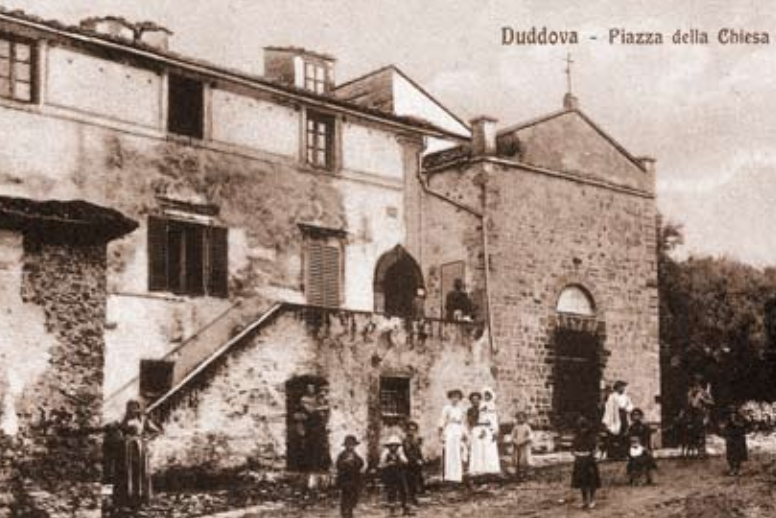
In the first half of the 20th century, over 120 people lived in Duddova, and the socio-economic life was frenetic: in addition to the school (up to the third grade), there were 3 oil mills, the blacksmith, two shoemakers, two carpenters, two seamstresses, the mattress maker, the baker and the cobbler. It was precisely the cobbler’s shop that made the town famous after the war: it made tailor-made shoes for all the inhabitants of the valley.
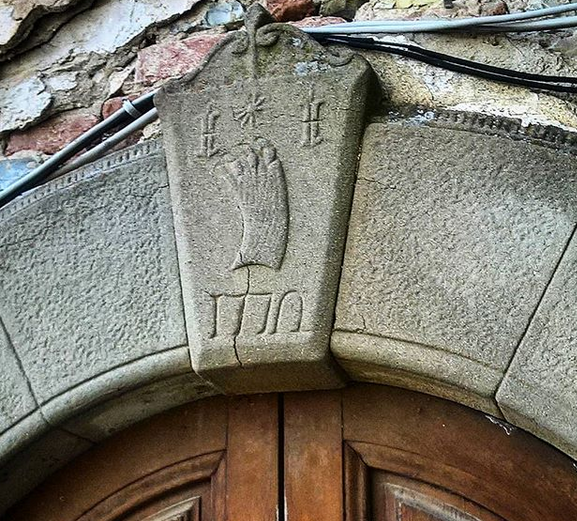
Walking through the town you can find beautiful stone millstones, the oldest dating back to 1600, which demonstrate Duddova’s vocation for the production of olive oil.
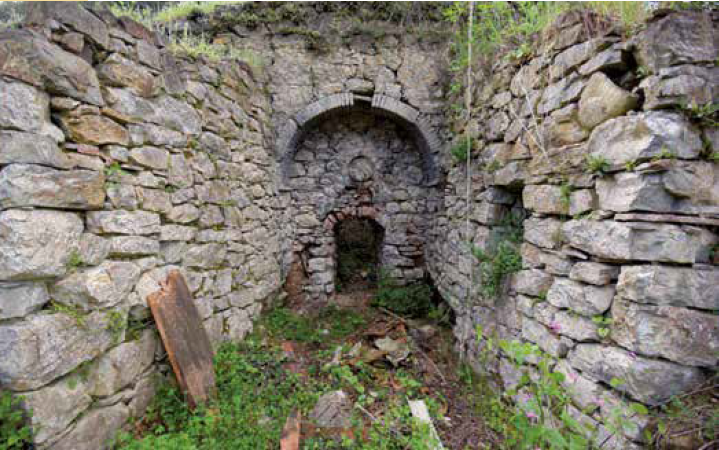
Going up towards I Tribbi, immediately after leaving the town, we can see on the left an ancient lime kiln, probably dating back to the 18th century. The “kiln maker” was a person who knew the art of preparing the kiln. The Alberese stone was transported by an ox cart, and was used to fill the furnace in order to build a dome. The upper part was then covered with earth with appropriate openings. From the mouth of the furnace at the bottom, the fagots were placed and set on fire. After a week of constant fire the furnace was sealed and allowed to cool. And so it remained to be consumed little by little.
Not far from the Church there are two curious twin buildings located a short distance from each other, commonly called I Casotti. Tradition indicates them as very ancient watchtowers.
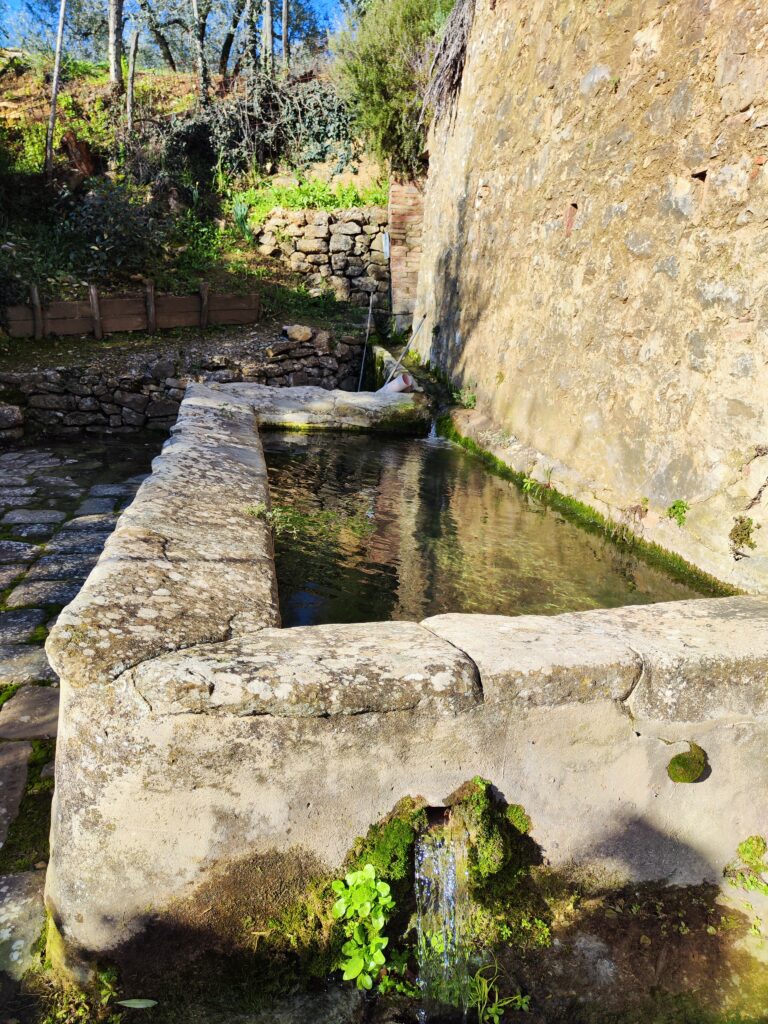
Going down Via della Sete you arrive at the Antica Fonte di Duddova, an ancient source with stone wash houses, which in the past had the function of supplying water for domestic use.
Montebenichi
Traveling along the road that leads from Pietraviva to Montebenichi, you pass through beautiful villas that belonged to the Medici family in the 1500s, surrounded by postcard landscapes with majestic vineyards, which surround the Fattoria La Selva.
The castle of Montebenichi has ancient origins, as evidenced by the discovery of a Roman sarcophagus in travertine found near the Parish Church of Santa Maria Assunta in Altaserra, a church of probable early Christian origin which still houses a baptismal font in carved stone dated 1596, and a holy water font from 1574.
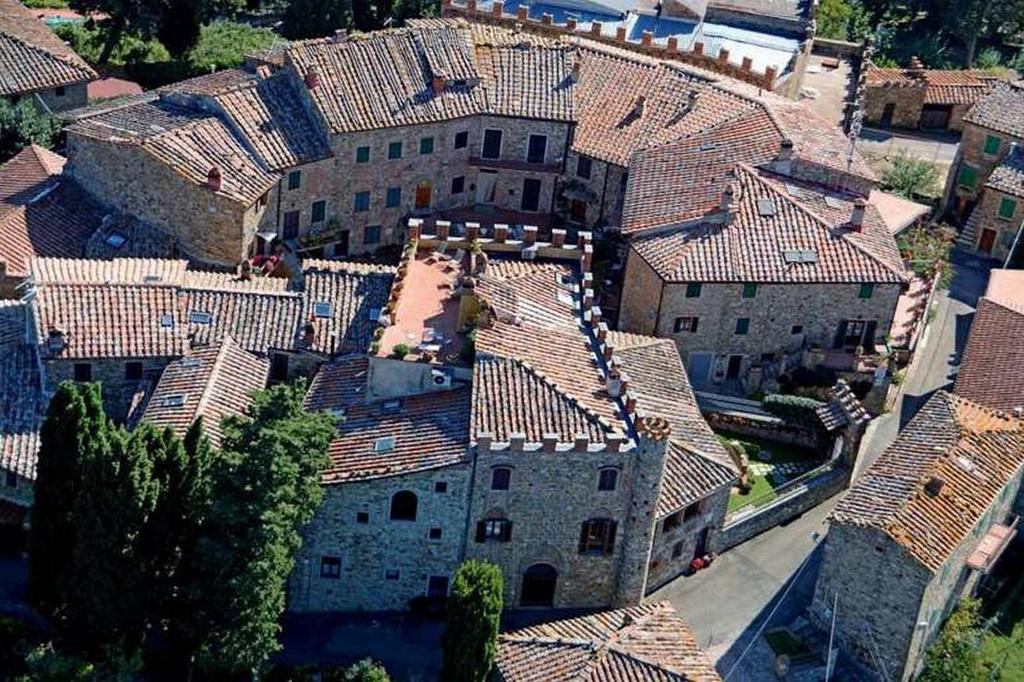
Starting from 4 June 1203, Montebenichi represents the border between the Republic of Siena and that of Florence. In 1478 there was one of the bloodiest and most disastrous events in Valdambra: sacked and set on fire by the Aragonese of Charles V, what remained of the ancient fortress was little rubble and only at the beginning of the 16th century did it undergo reconstruction, with the urban layout that we know today.
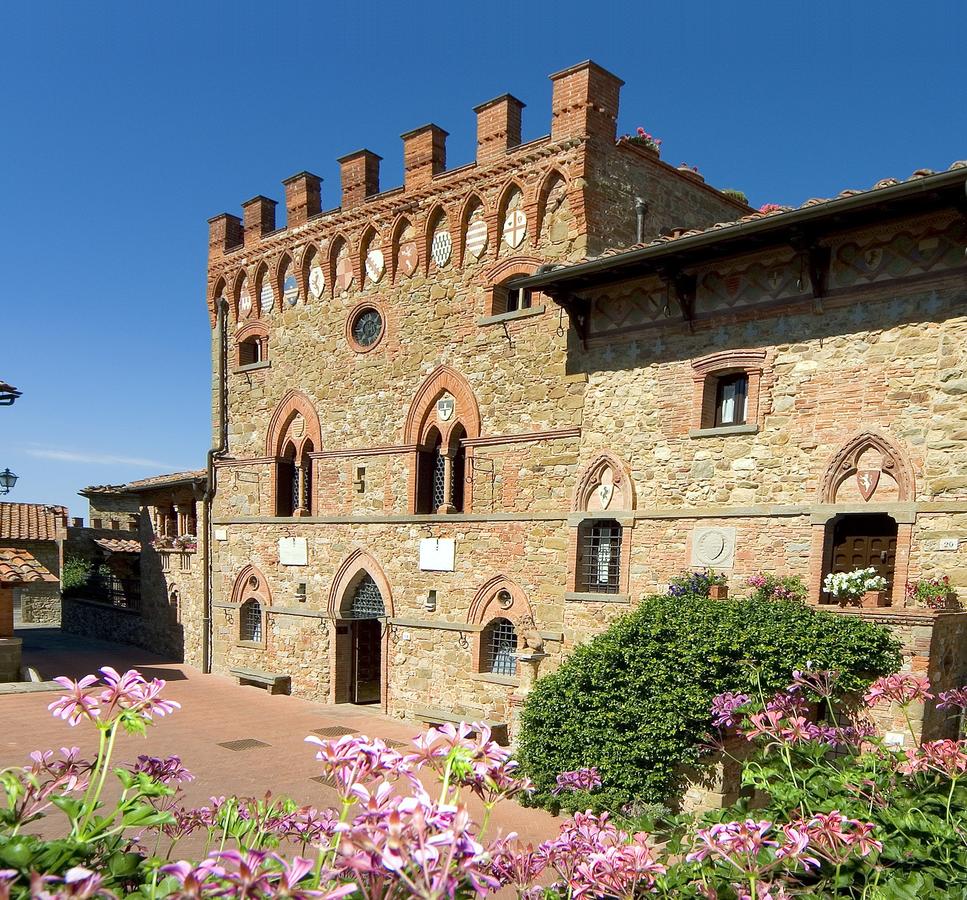
In 1557 Montebenichi became part of the Grand Duchy of Tuscany entrusted to the Medici. In this period, the lord of Montebenichi was Gregorio di Benedetto Stendardi, later known as Capitan Goro, a mercenary leader in the service of the Grand Duke. In addition to having distinguished himself in numerous warlike exploits, Captain Goro is remembered above all for the heroism demonstrated in the battle of Gavinana in August 1530 when he shielded Francesco Ferrucci with his body.
In the following centuries the fortress was gradually transformed into a series of homes for the use of peasant families. The patronage of the Standards, descendants of Captain Goro, remained in Montebenichi until 1860.
Worth mentioning is the suggestive route that leads from Montebenichi to San Vincenti, passing through Giusterna, which passes through open landscapes and well-kept riding stables. Monte Luco is clearly visible, the hill on which the large television repeater stands.
Sogna
The date of construction of the castle of Sogna is not known, but we know that in the century. XI° the church and parish of S. Tommaso a Sogna depended on the Badia di Ruoti. In 1200 the castle of Sogna represented the center of power of the powerful feudal Ubertini family, as witnessed for the first time in a deed of 1275.
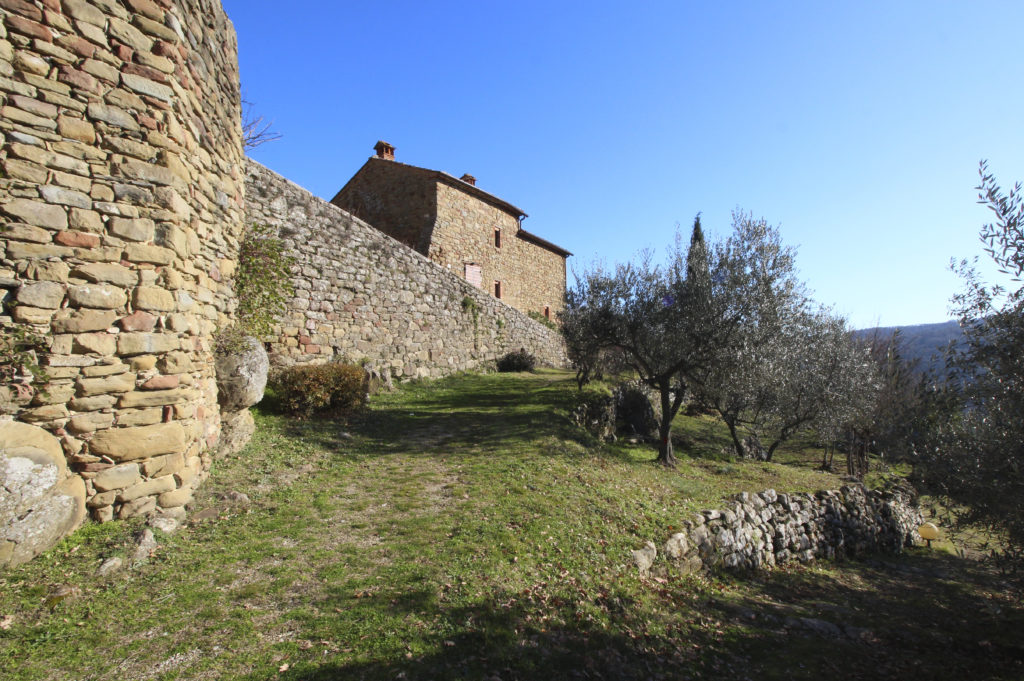
With the new century, a period of wars began between Siena, Arezzo and Florence until the darkest day, Thursday 15 June 1307 when the Florentines burned the castle and demolished every building. In 1385 Sogna, together with Rapale, came under the dominion of Florence, but things did not improve because around 1430, during the war fought by Siena and Milan allies against Florence, the castle of Sogna was once again conquered and destroyed by the Sienese.
Following Florence’s victory over Siena in the 16th century, greater tranquility spread to the valley and the inhabitants were able to reorganize their daily lives, without the fear of invasions and looting. The fortifications of Sogna were not repaired, and so, as the centuries passed, only ruins remained of them.
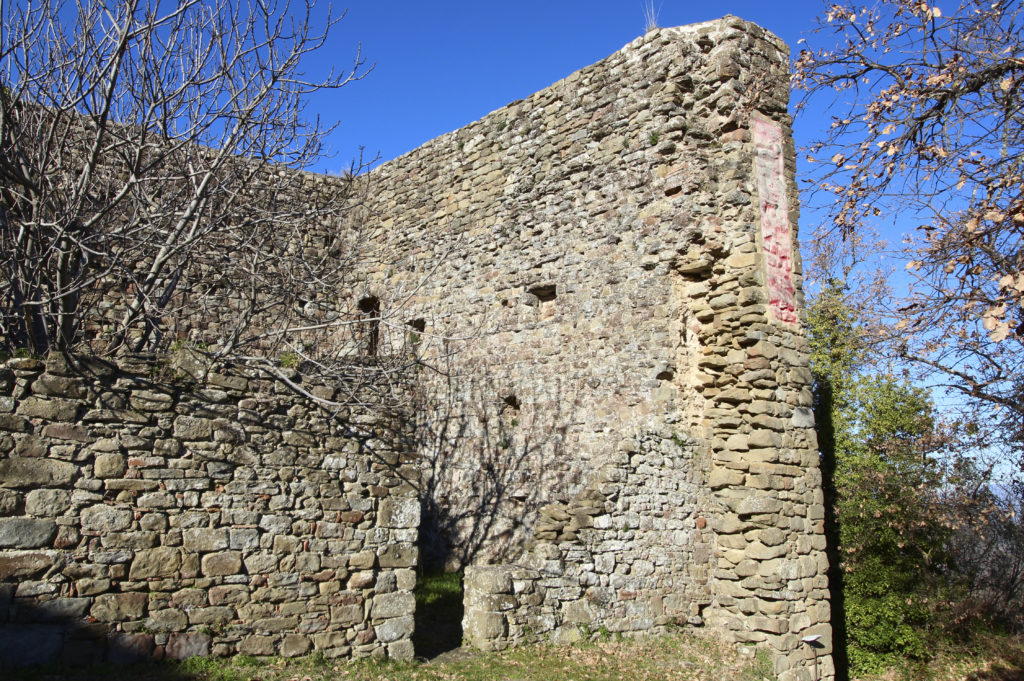
Today the village has been completely and tastefully renovated, with an adjoining swimming pool and tennis court. Walking through the narrow streets of the town, where it is very difficult to meet other people, is a unique and unforgettable experience, like taking a leap into the glorious medieval past of these lands.
Not far from Sogna we find the village of Rapale, reachable by walking for 2.5 km on an old dirt road.
Cennina
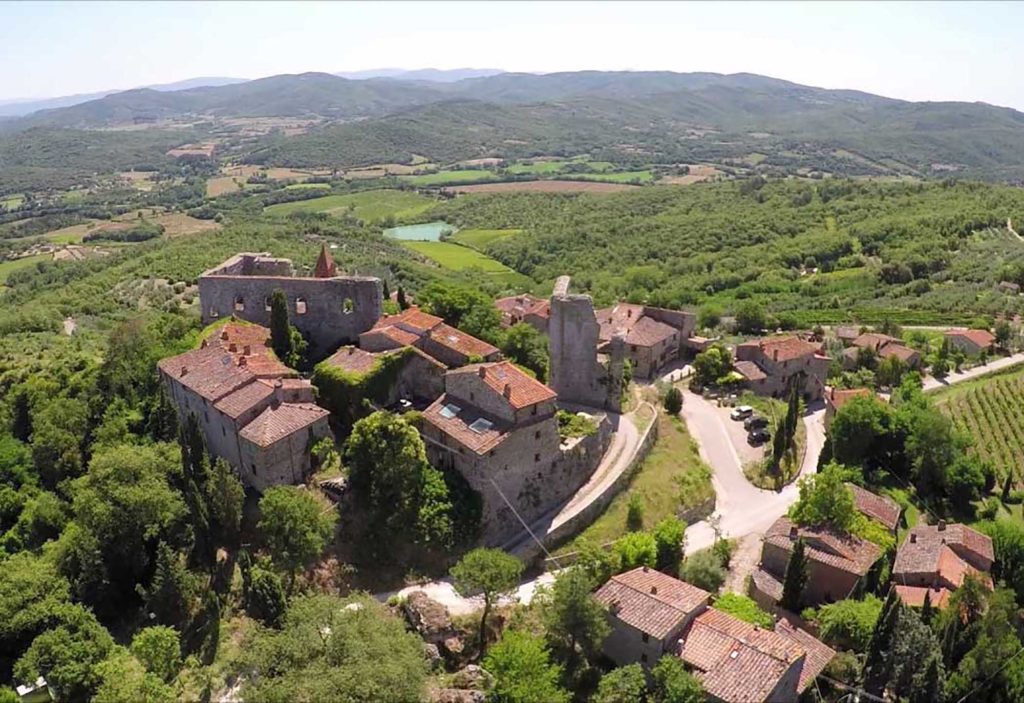
It is certainly one of the most evocative castles in the valley. Cennina is built on a hill 477 meters above sea level, in a dominant position over Valdambra.
Its origin dates back, in all probability, to the Etruscan-Roman era and its development to the Lombard era. It is mentioned for the first time in a donation by Charlemagne to the Abbey of Nonantola in 780; the term Castle is found for the first time in another document from 973, in which Otto the Great orders its construction.
The castle, whose remains are still clearly visible today, was built in 1167 by the Ghibelline count Brandaglia Alberigo d’Uguccione. In the following years, Cennina, together with the entire Valdambra, was mutually occupied by the Tarlati, Ubertini and Counts Guidi families, as they were a border land between the Florentine, Arezzo and Sienese dominions, and the castle was consequently besieged, destroyed and rebuilt several times , involved in the wars between Guelph Florence and Ghibelline Siena and Arezzo.
On a Friday the 13th of 1307, Cennina was destroyed at the hands of the Sienese, allied with the black Guelphs of Florence who were at war against the white Guelphs allied with the Ghibellines of Arezzo. In 1360, after various events, Cennina definitively became part of the Florentine territory, which established its own fortified outpost in the valley. After almost a century, in 1447, still in the hands of the Florentines, it underwent a devastating siege by the Aragonese troops, allies of Siena. Despite the stiff resistance it was conquered, but after only fifteen days it was reconquered and strengthened. The last military occupation of Cennina took place in 1529, it was carried out by the army of the Prince of Orange passing through on the road to Florence.
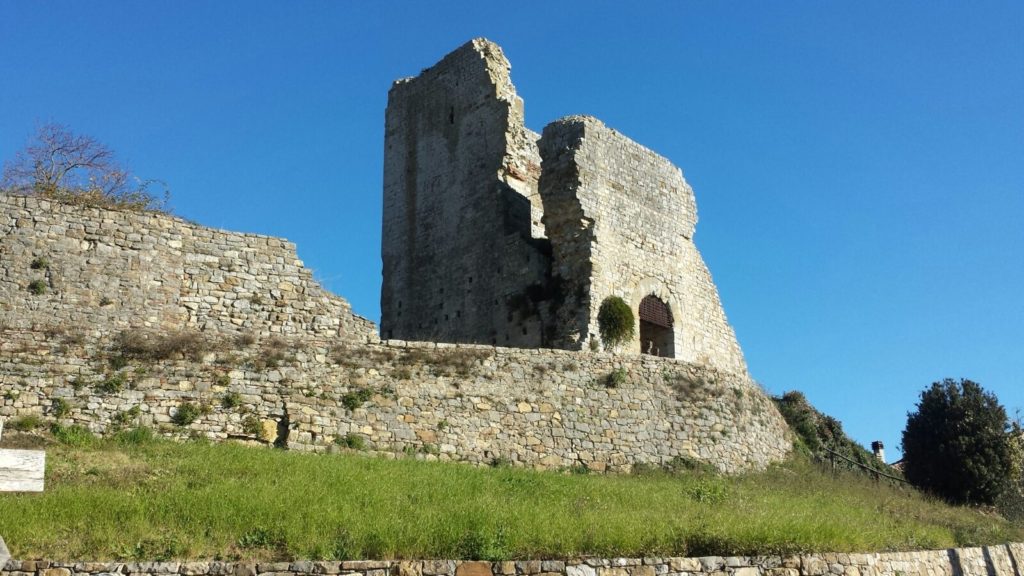
The village of Cennina is still enclosed by the remains of an imposing city wall, inside which there are several rural houses, almost all of which were built in the past centuries using the stones of the castle. Traveling along the road that leads from Cennina to Solata, at the end of the town, we can see the collapsed corner tower, now lying on the ground.
The country hit the headlines in the 1950s for what was considered one of the most relevant cases of close encounters with UFOs.
Rosa Lotti Dainelli, a forty-year-old farmer who lived near Cennina, walked towards the cemetery on November 1, 1954 at 6:30 in the morning. Near a clearing about 20 meters away she glimpsed a fusiform object among the bushes, stuck in the ground in a vertical position. Two beings with humanoid features but only one meter tall suddenly emerged from the bushes. They wore tight gray overalls with shiny buttons, a short cape over their shoulders, a leather helmet, and a ribbon around their foreheads.
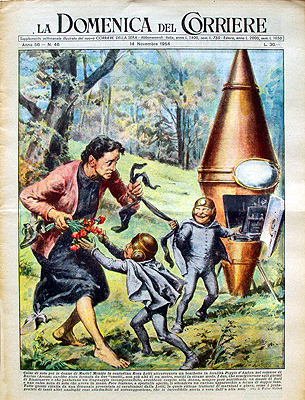
The humanoids seemed friendly and spoke a language similar to Chinese; the two took the flowers and a stocking from her, which they placed inside the fusiform object.
This testimony was accompanied by other reports of sightings of flying objects in the area. A few days earlier, on October 27, similar sightings were also recorded in the city of Florence, in particular during the match at the Franchi stadium: for about half an hour, a “snowfall” of filaments of an unknown whitish and sticky material fell on the spectators , baptized by the press of the time with the name “siliceous cotton wool”.
Solata
The historical origin of the village is not certain, but it was most likely built at the same time as the construction of the numerous fortified villages in the area which took place around the year one thousand. The ancient road that led from Cennina to Monteluco della Berardenga passed through here, therefore the road that allowed contacts and trade between Valdambra and Chianti.
Near Solata is Poggio Ascensione, where the maximum altitude of the municipality of Bucine is recorded: 655 meters above sea level. The town is easily reachable on foot, thanks to a dirt road, continuing after Cennina.
Badia a Ruoti
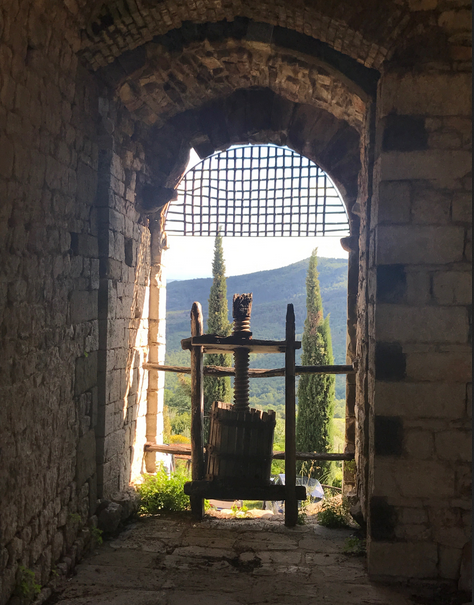
The town is still dominated today by the abbey of San Piero a Ruoti, documented since 1076, when it adhered to the Camaldolese rule; it had jurisdiction over numerous churches and monasteries between Valdambra and Siena. The town was accessed through a sixteenth-century gate, called Porta Torricella, in which the openings for the grate can still be seen.
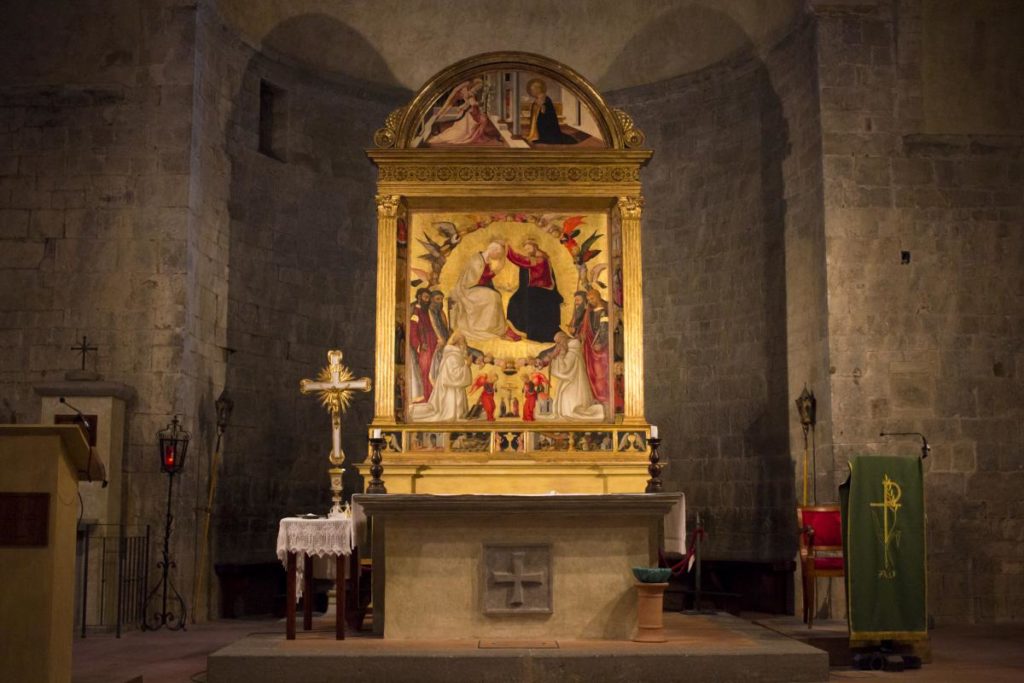
Of particular interest is the altarpiece by the Florentine painter Neri di Bicci kept inside the abbey. The work was specially created on commission by the monks of the abbey: Abbot Bartolommeo paid the artist 46 florins. The frame and the carving were created by Giuliano di Nardo da Maiano, who completed the structure on 24 October 1472.
Lupinari
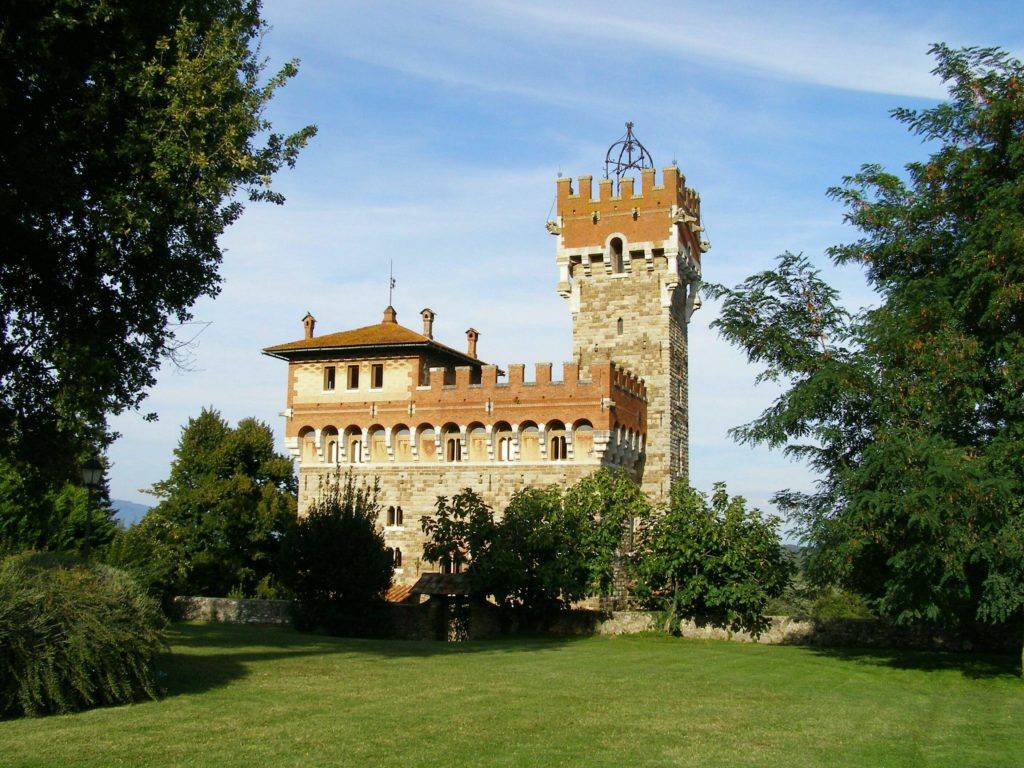
Inside a small sixteenth-century village, between Pogi and Cennina, we find the Lupinari Castle, also known as Villa Frisoni, from the name of the owner, Cavalier Luigi Edoardo Frisoni, member of parliament in the Giolitti and Salandra governments, who made Lupinari his residence .
The construction of the Castle began in 1906, and ended two years later: it was designed by the Genoese architect Gino Coppedé, a lover of the Art Nouveau style, albeit with different influences.
Galatrona
Of this castle, already mentioned in documents from the 10th century, only its “New Tower”, 26 meters high, known as the Torrione, remains visible. Visiting the Galatrona Tower you immediately realize the strategic importance of the place, from which it is possible to have total control of the valley. The oldest information on the structure dates back to 963, but almost certainly the area was also a settlement in the Etruscan era: the name itself seems to derive from Canastruna.
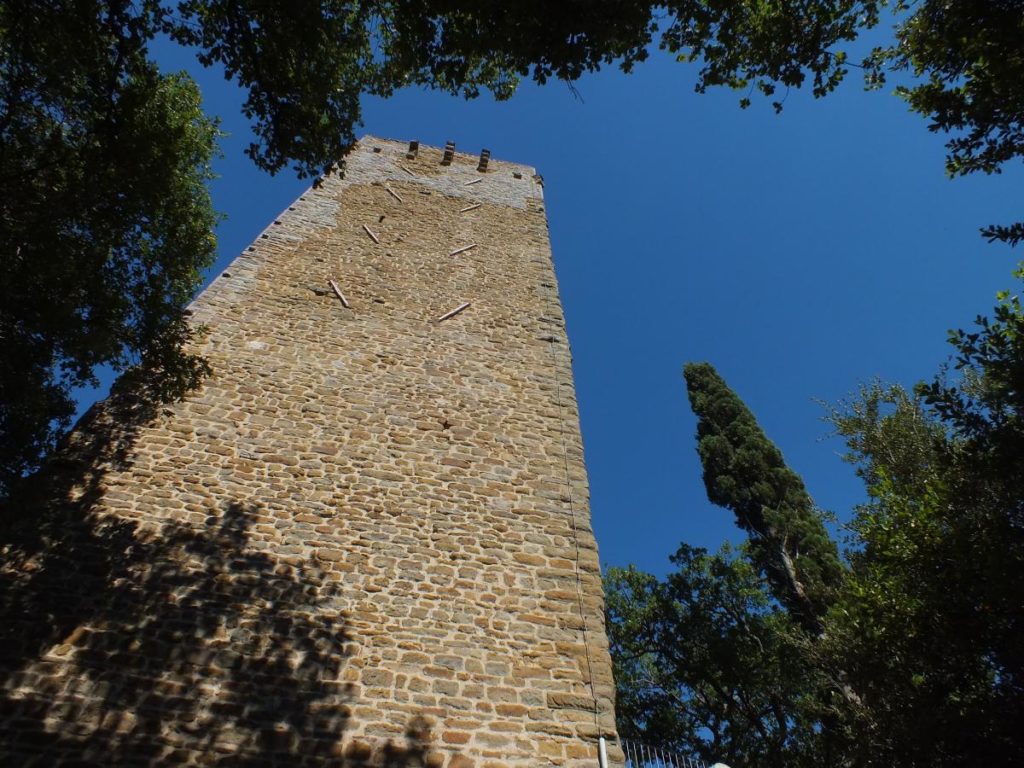
Originally from this place was Nepo da Galatrona, a sorcerer and barker well known in fifteenth-century Florence. It seems that Lorenzo de’ Medici himself had brought it to Florence. His alleged supernatural activities made him fall into the sights of the Florentine Inquisition first, and then the Valdarno one. In both cases he was saved thanks to the intervention of the De’ Medici family.
Visit Valdambra | Guida Turistica | Comune di Bucine
A land inhabited since ancient times
Traces of lithic artefacts, axes and arrowheads testify to how Valdambra has been inhabited since prehistoric times. More substantial are the findings from the archaic Etruscan period (6th century BC), in particular those of Monte di Rota, just above Duddova, and of Poggio Castiglione, on the right bank of the Ambra river. These settlements demonstrate the importance of the road which already ran through the Umbro Flumen valley (this was the name with which the Romans, centuries later, referred to the Ambra river), and which connected the cities of coastal Etruria to the central ones.
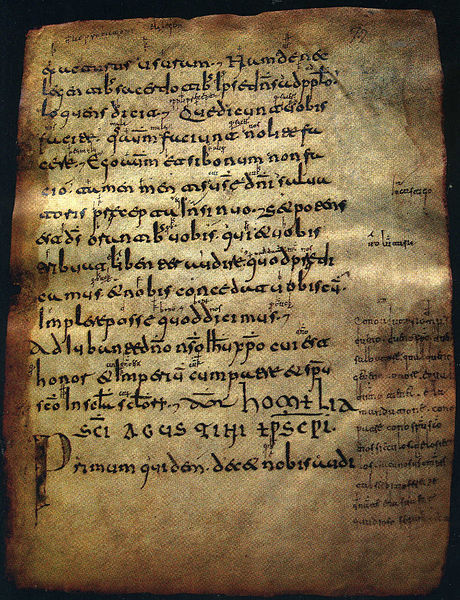
The Constitutum Vicecomitatus Vallis Ambrae, better known as the Statute of the Val d’Ambra, was drawn up in 1208 by order of Count Guido Guerra III and was the political constitution of the Viscounty of the Val d’Ambra, the administrative sub-region of the possessions of the Guidi counts. It is the first statute in Tuscan history if we exclude the Brief Consulum Pisanae Civitatis of 1163 which however does not equal it in terms of complexity and legal completeness. For some principles, the statute presented elements of strong modernity such as the fact that it included sexual violence against women among the most serious crimes. Wikipedia